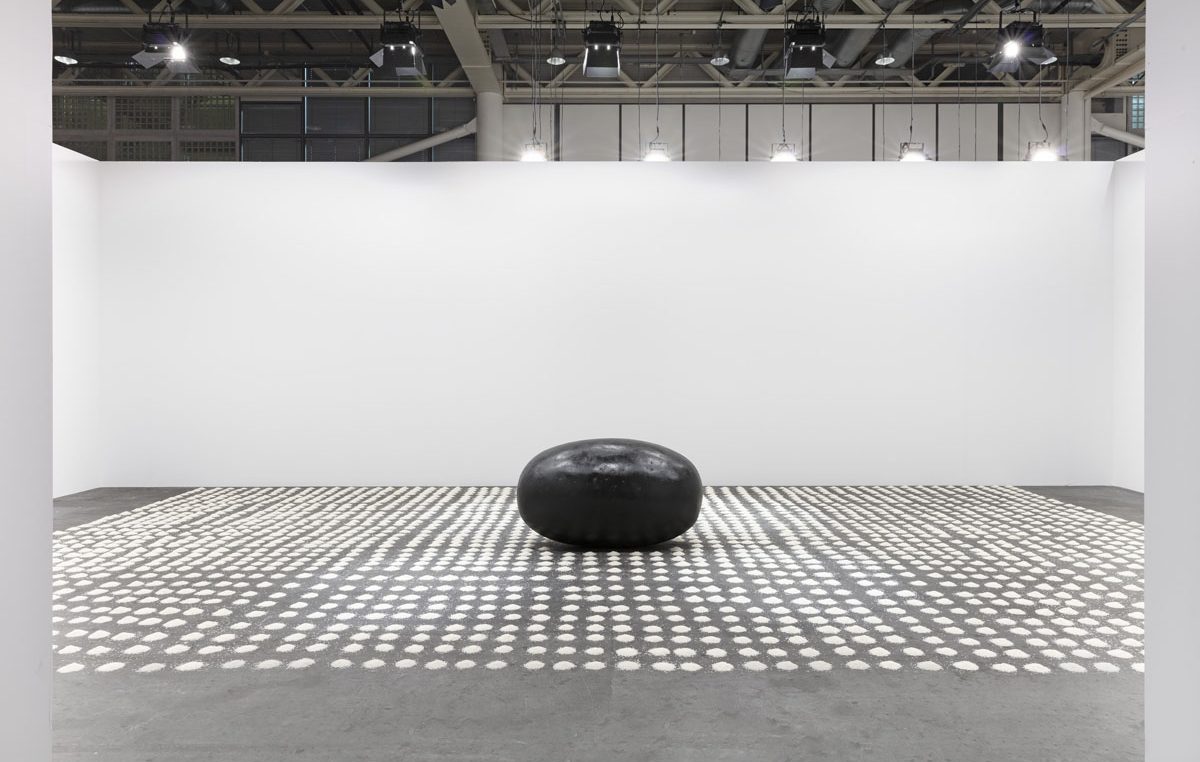
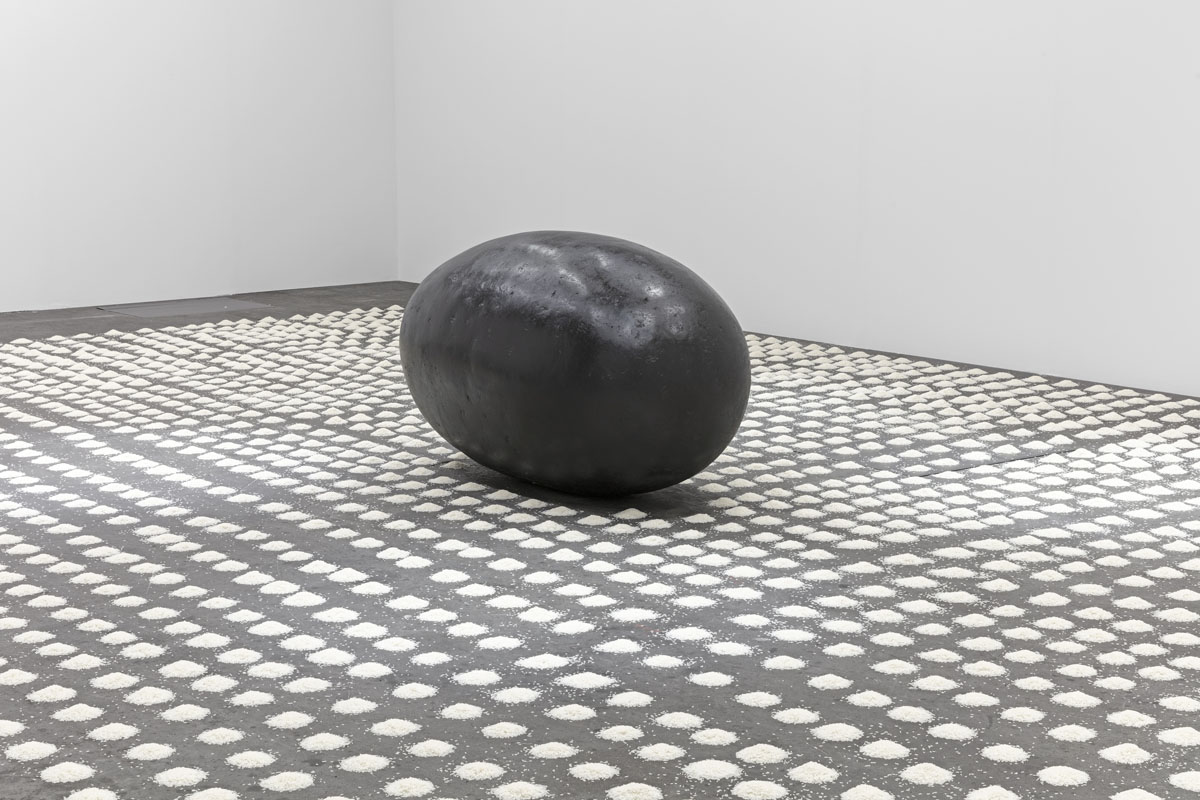
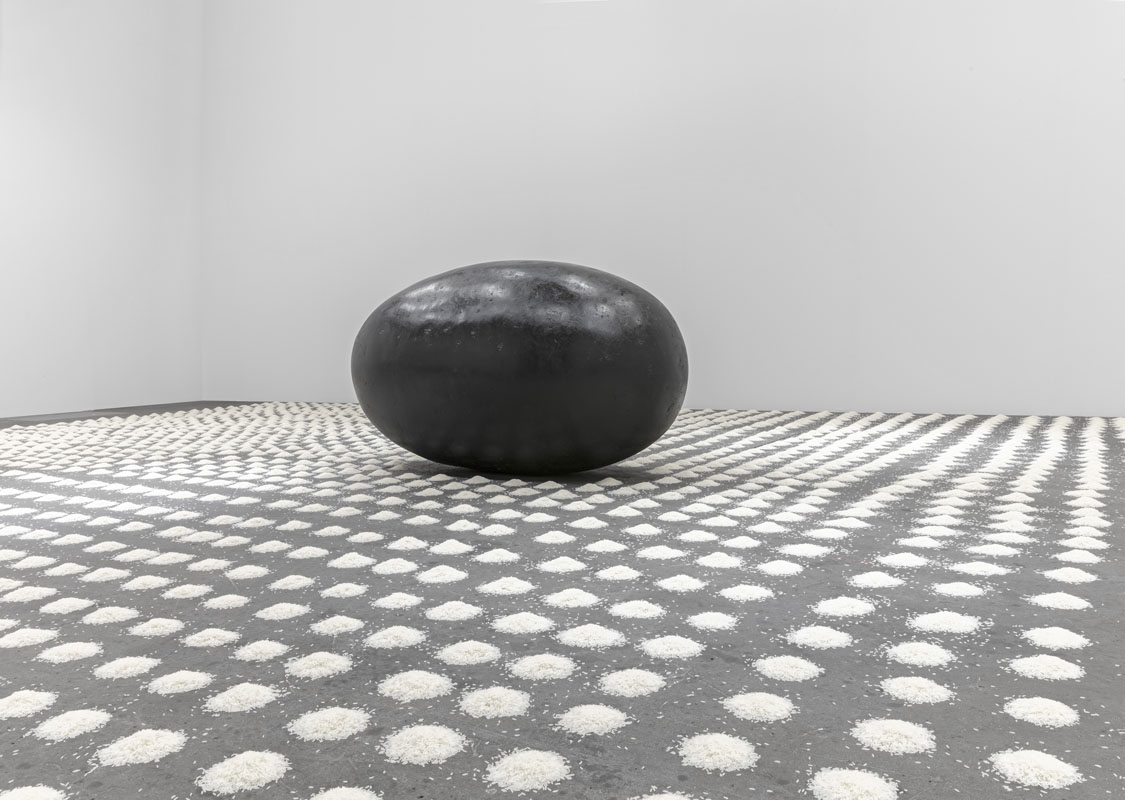
Wolfgang Laib’s installation Brahmanda consists of an oval-shaped black Indian granite stone meticulously polished with sunflower oil and black smoke, set amidst a field of rice mounds. The work title draws inspiration from the Sanskrit cosmogony, beginning with Brahman and the ‘Cosmic egg,’ and serves as a testimony to the spiritual reality of the world and the wholeness of the universe. The natural markings on this essential geometric form symbolize the unity of the male and female principles, joined here in a unique pursuit of togetherness. The concept of creation is also conveyed through the handfuls of rice grains: ‘It’s very simple things like milk, pollen, rice. Food,’ says Laib, ‘very simple things that were there 1,000 or 5,000 years ago. And I think that’s a big challenge for what we’re doing now. And where we are now.’
Wolfgang Laib
WOLFGANG LAIB | Unlimited 2024 | Art Basel Unlimited
- Artista
- Wolfgang Laib
- Data
- 13 – 16 giugno
- Location
- Messe Basel
Photo Gallery
L'artista

Wolfgang Laib (b. Metzingen, Germany, 1950), lives and works between southern Germany, southern India, and New York. After studying medicine at the University of Tübingen, he devoted himself to art practice by creating sculptures and installations that seem to link past and present, the ephemeral and the eternal, using simple