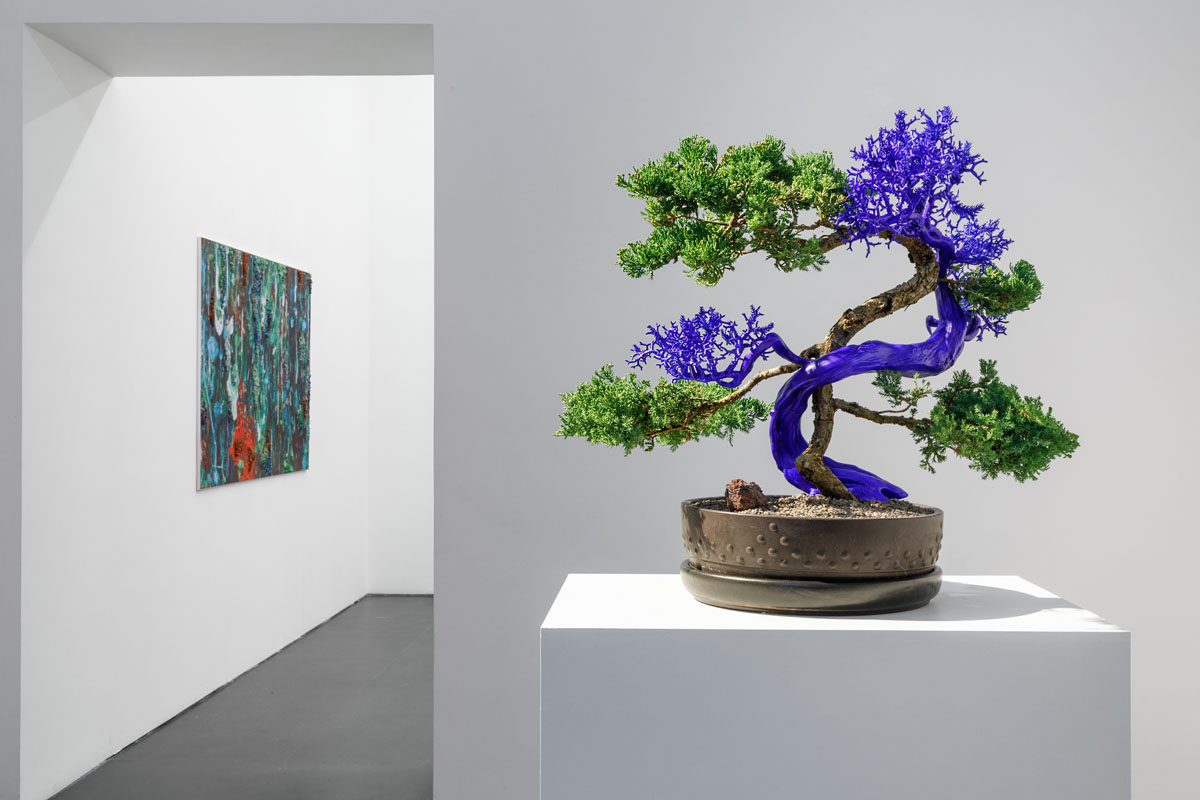
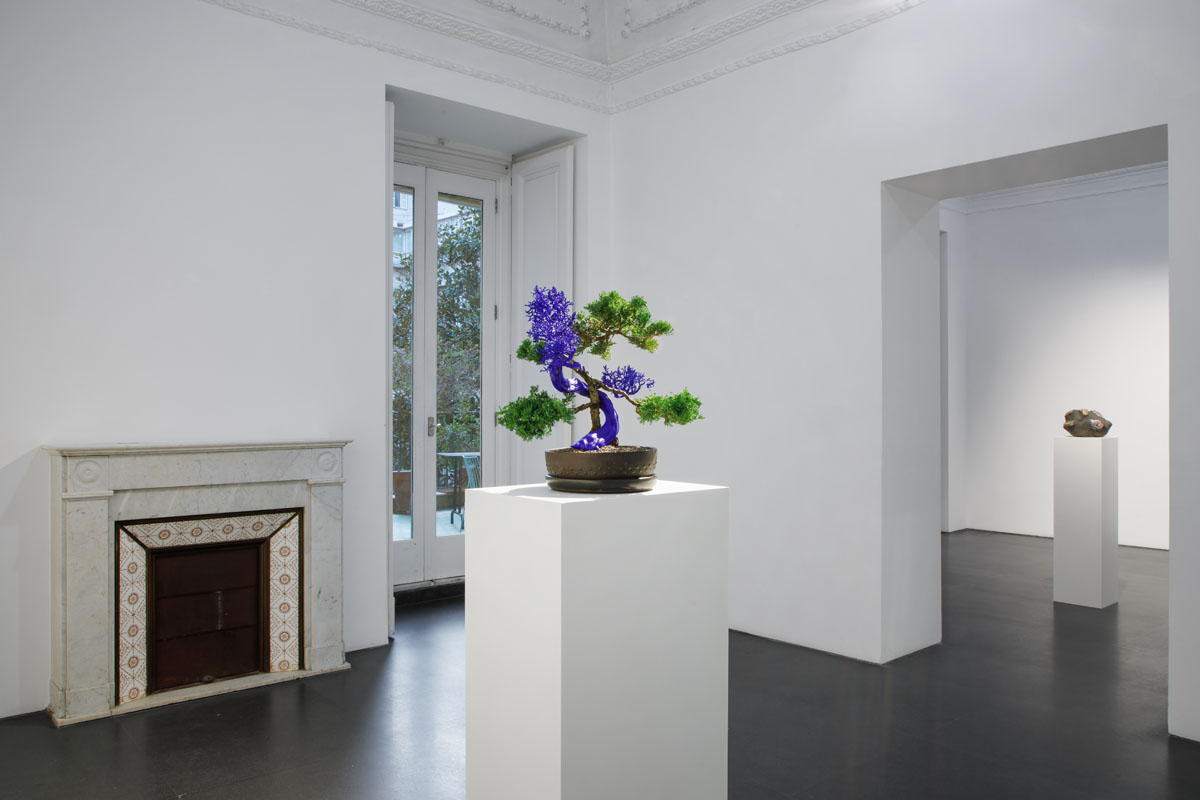
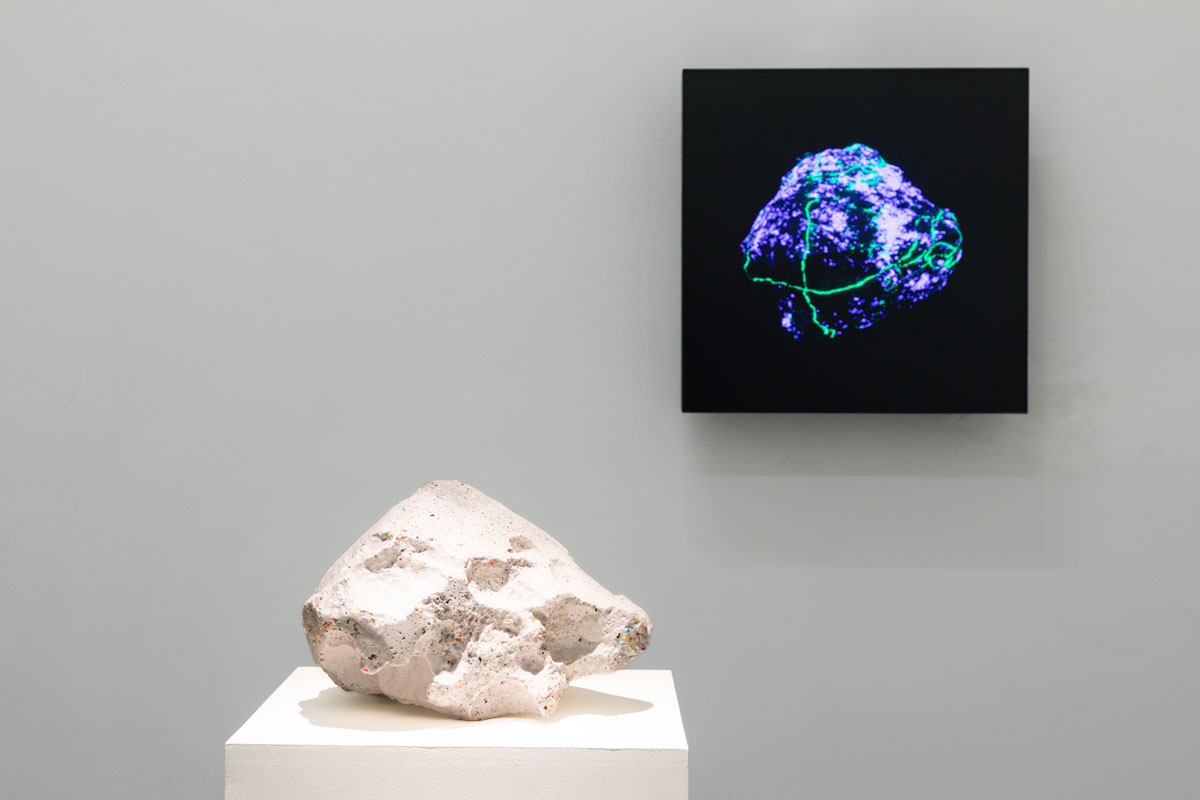
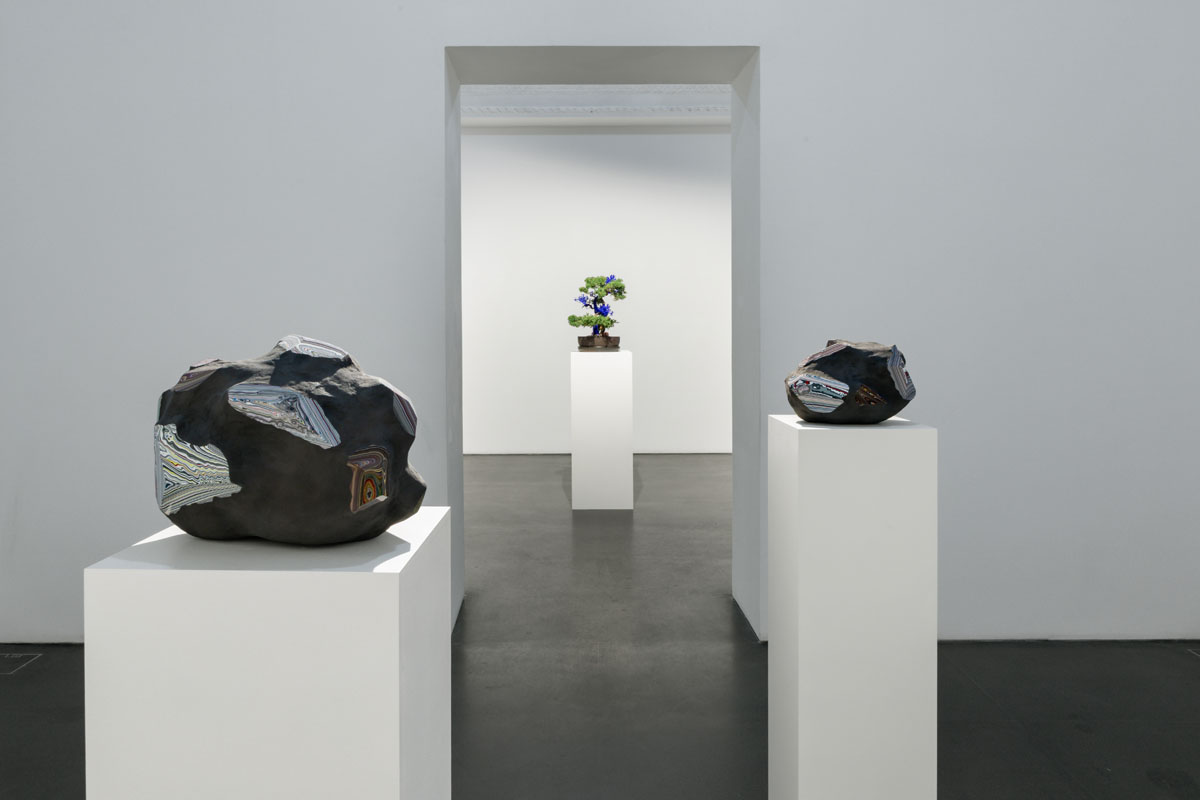
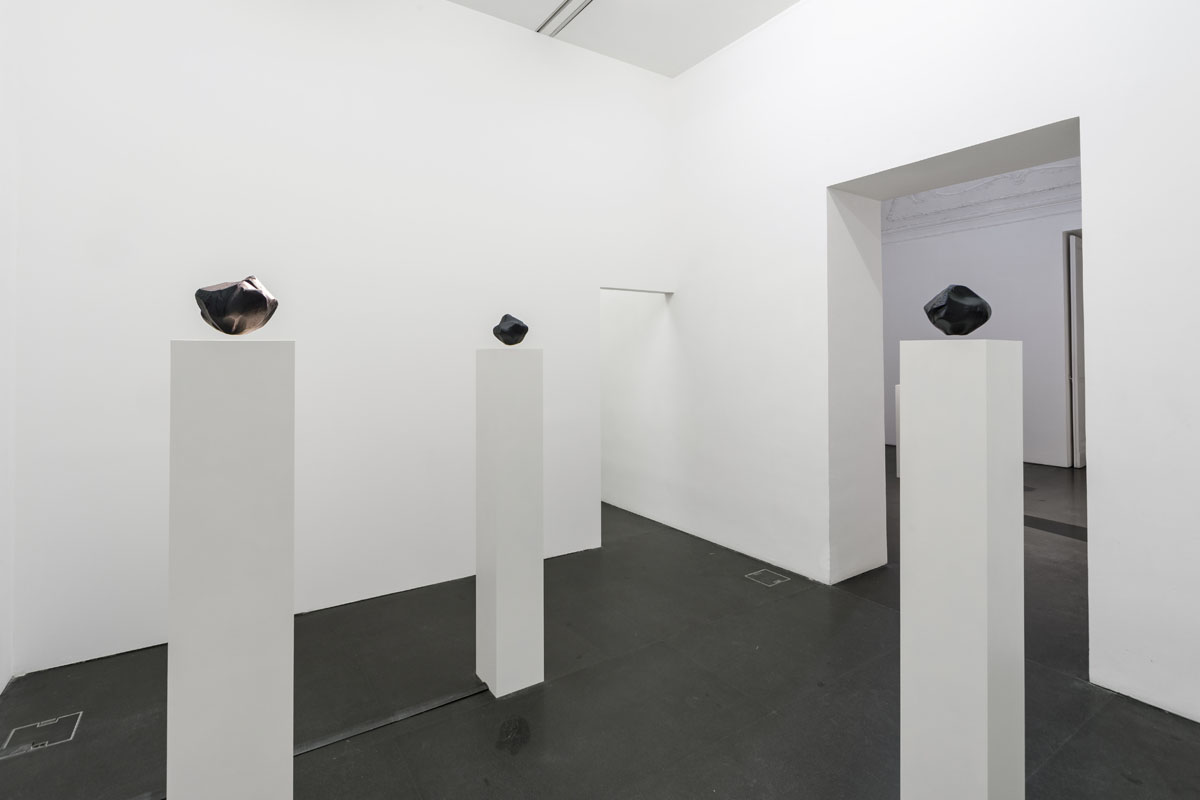
Lia Rumma Gallery is pleased to present Variantology, Agnieszka Kurant’s first solo exhibition with the gallery, on view from December 4, 2025. The show features a selection of new and recent works.
Kurant’s multidisciplinary practice explores collective and nonhuman intelligences, the future of labor and creativity, and the exploitations within digital capitalism. Drawing on philosophy, anthropology, technology, and science, her work centers on the emergence and evolution of forms shaped by collective agency, be they termite mounds, minerals, languages, signs, tools, currencies, or social movements. In collaboration with scientists, she sets up complex systems, networks, and environments where multiple agents—molecules, bacteria, animals, AI algorithms, or human crowds—interact to generate hybrid, unstable forms undergoing constant metamorphosis, like living organisms. Oscillating between biological, digital, and geological, natural and artificial, life and nonlife, deep past and deep future, her works explore plural subjectivity, the evolution of living systems, culture and technology, transformations of the human, automation and cybernetics.
Kurant’s research-based works draw on processes of networked value creation in the digital economy and investigate collective authorship and the global system of labor exploitation embedded in artificial intelligence. The hybrid forms she produces often counter algorithmic predictions with uncomputable, unpredictable processes. Her assemblages and amalgamations, grown, evolved, crystalized, or shaped on a molecular level, emerge from the mutations of matter in the Anthropocene and reflect shifts in collective subjectivity influenced by technology. These speculative experiments propose ideas for how human and nonhuman life might evolve.
The exhibition title - Variantology - draws on the interdisciplinary research concept introduced by media archeologist Siegfried Zielinski, which questions linear technological progress and explores the variations and alternatives to dominant narratives of the history of technology and media. Variantological approach investigates "deep time" relations, looking at how arts, sciences, and technologies in diverse cultures of knowledge have evolved together, often in unexpected ways, from ancient to modern times. Joining a possible past to a possible future, it seeks to understand how these variations have shaped our world and to challenge the idea of a single, correct path of development. The unusually important role of Naples in the history of alchemy and technology plays an important part in Variantological approach. In Kurant’s take on Variantology, the predictions of the future, which technology currently produces, are entangled in a recursive relationship with the world, influencing the present and the future, regardless of whether they ever come true.